
Our services
Concrete technology consulting across the full project lifecycle.
From pre-tender feasibility to post-construction rehabilitation. Six core disciplines, one integrated approach. Every service is grounded in deep field expertise across hydroelectric and large-scale infrastructure projects.
Full lifecycle coverage
Services mapped to every project phase.
Most consultants cover one phase. We cover every stage, because concrete decisions at pre-tender directly affect performance at commissioning and throughout the asset's operational life.
Pre-Tender & Feasibility
Material sourcing, technology selection, specifications review, and cost optimization before a single pour.
Construction & Placement
Mix design trials, thermal control, quality monitoring, and real-time troubleshooting during active construction.
Commissioning & Handover
Performance verification, QC documentation, as-built records, and technology transfer to owner teams.
Operations & Asset Life
NDT assessment, structural integrity evaluation, service life estimation, repair strategies, and life extension programs.
Six core disciplines
Deep expertise in every aspect of concrete technology.
Mix Design & Performance Concrete
The right formulation for every pour, every condition, every structure.
Custom-engineered concrete mixes for gravity dams, RCC dams, tunnels, and powerhouses, from high-performance concrete to low-cement eco-friendly formulations optimized for your specific aggregates, climate, and structural requirements.
- Mass concrete (CVC & RCC)
- High-Performance Concrete (HPC)
- Shotcrete & grout formulations
- Low-cement / eco-friendly mixes
- ICAR Technology for RCC
Delivered at:
Thermal Control & Placement Engineering
Mass concrete cracks are preventable. We prove it every project.
Pre-cooling, post-cooling, placement temperature limits, lift thickness optimization, and curing regimes, all engineered to keep peak temperatures below cracking thresholds on every pour.
- Thermal stress analysis
- Pre-cooling & post-cooling design
- Lift thickness optimization
- Placement temperature planning
- Curing regime engineering
Delivered at:
Durability & Service-Life Design
Design concrete for a 100-year service life, not a 30-year gamble.
Resistance to alkali-aggregate reaction, sulfate attack, chloride penetration, and freeze-thaw cycling designed into the concrete from day one. We engineer for 100-year service life in the harshest environments.
- AAR mitigation strategies
- Sulfate resistance design
- Chloride penetration resistance
- Freeze-thaw durability
- Service life estimation
Delivered at:
QA/QC Systems & Lab Programs
Quality systems that catch problems before they become failures.
QC manual development, testing protocols, material acceptance criteria, lab setup advisory, and ongoing quality monitoring, from first trial mix to final placement. Quality systems that make non-conformance impossible.
- QC manual development
- Testing protocol design
- Material acceptance criteria
- Lab setup & advisory
- On-site quality monitoring
Delivered at:
Construction Troubleshooting & RCA
When concrete goes wrong, fast answers matter.
Root cause analysis for thermal cracking, strength shortfalls, honeycombing, segregation, and placement defects. Rapid diagnosis, practical repair recommendations, minimal schedule impact.
- Root cause analysis (RCA)
- Non-destructive testing (NDT)
- Corrective action design
- Repair strategy development
- Defect classification
Delivered at:
Independent Review & Owner's Engineer
An objective technical eye on your concrete program.
Third-party quality oversight for dam owners, developers, and lenders. Independent assessment of contractor mix designs, QC programs, and construction practices. When the stakes are measured in billions, independent verification is essential.
- Third-party quality audits
- Owner's engineer services
- Mix design review
- QC program assessment
- Construction practice evaluation
Delivered at:
Specialized technology
ICAR Technology
Individually Coated Aggregate for RCC
The ICAR methodology optimizes Roller Compacted Concrete by ensuring uniform paste coating on each aggregate particle. The result: improved compaction, enhanced layer bonding, and superior long-term durability in RCC dam construction.
Enhanced Compaction
Uniform aggregate coating eliminates dry pockets and improves density uniformity across every lift.
Superior Bonding
Better paste distribution at lift interfaces reduces cold joint formation between RCC layers.
Long-Term Durability
Optimized paste-aggregate interface reduces permeability and increases resistance to deterioration.
Cost Efficiency
Achieves target performance with optimized cementitious content: better results, lower material cost.
Why PCCI
The depth behind every recommendation.
IS:14591
National Standard Authored
Our leadership wrote India's standard on thermal control of mass concrete
ICAR
Specialized RCC Methodology
Individually Coated Aggregate for RCC optimization
75–100+
Year Design Life Engineered
Concrete built to outlast generations
48+
Technical Papers Published
The research depth behind every recommendation
How we engage
Seven ways to work with PCCI.
From full-time site presence to one-time assessments, choose the engagement model that fits your project. Every model delivers the same depth of concrete technology expertise.
View detailed engagement modelsEmbedded Site Consultant
Full-time on-site presence during construction. Your dedicated concrete specialist embedded within the project team, from first pour to commissioning.
Best for: Large dam and hydropower projects with multi-year construction timelines
End-to-End QC Outsourcing
PCCI owns your entire concrete quality function: lab setup, staffing, testing, reporting, and NCR management. Your team builds; we guarantee quality.
Best for: EPC contractors without in-house concrete QC expertise
Project-Based Advisory
Scoped engagement for specific project phases. Mix design development, thermal control planning, durability assessment, or QA/QC system setup with defined deliverables and timelines.
Best for: Specific technical challenges requiring focused expertise
Independent Technical Review
Third-party assessment for project owners, lenders, and regulatory bodies. Unbiased evaluation of concrete technology decisions, contractor performance, and quality systems.
Best for: Project owners, multilateral lenders, and dam safety authorities
Assessment and NDT Services
Concrete integrity assessment using non-destructive testing. PCCI can execute NDT directly, supervise third-party testing, or provide post-construction condition assessment.
Best for: Dam owners, safety reviews, DRIP rehabilitation, aging infrastructure
Retainer: On-Call Specialist
Ongoing access to concrete technology expertise. Rapid response for troubleshooting, test result interpretation, specification review, and technical queries as they arise.
Best for: Organizations managing multiple projects or ongoing operations
Pre-Tender Support and Trial Mix Programs
From material investigation through complete trial mix programs managed via partner laboratories. PCCI designs, coordinates, tests, and reports.
Best for: Project owners defining tender parameters, EPC contractors preparing bids
Services by industry
Tailored to the demands of every sector.
Our services are adapted to the specific technical challenges, regulatory requirements, and performance standards of each industry we serve.
When do you need a specialist?
Three scenarios where a dedicated concrete technology consultant changes the outcome.
Most dam projects have structural engineers, geotechnical teams, and contractor QC departments. The question is whether they have the specialized concrete materials expertise that prevents the problems these teams are not trained to anticipate.
"Our EPC contractor has a QC team. Why do we need a separate consultant?"
A contractor's QC team ensures construction follows the specification. They test, document, and report. But they do not write the specification. They do not design the cementitious system. They do not model the thermal behaviour. And they have a commercial interest in the concrete passing, not in questioning whether the specification itself is adequate.
An independent consultant designs the concrete system before the contractor mobilises, reviews the contractor's QC programme for gaps, and provides a second opinion when test results are borderline. The consultant's independence is the value: they have no stake in the construction schedule.
The difference: The contractor asks "does this batch meet spec?" The consultant asks "is the spec right in the first place?"
"Government and institutional laboratories can handle the testing. Why hire a private firm?"
Government research stations perform excellent laboratory testing and contribute foundational research. But their mandate is typically limited to testing and reporting. They do not embed at the construction site. They do not manage the day-to-day QC programme. They do not troubleshoot placement problems at 2 AM when the concrete temperature is rising.
A private consultant provides continuous site presence, designs the complete QC system (not just individual tests), manages the trial mix programme through accredited partner laboratories, and takes engineering responsibility for the concrete performance. The consulting engagement covers design, testing, monitoring, and troubleshooting as an integrated service.
The difference: A lab tells you what the concrete is. A consultant ensures it becomes what you need.
"A large firm like Hatch or AECOM covers everything. Why a niche specialist?"
Large multidisciplinary firms bring scale, global reach, and comprehensive project management. Concrete technology may be 5% of their total scope on a dam project. The person reviewing your mix design is one of hundreds of engineers, and may rotate off to another project next quarter.
A specialist concrete technology consultant does one thing: concrete for dams and critical infrastructure. Every project, every team member, every reference is in this domain. The senior consultant who designs your cementitious system is the same person who shows up at site when the first pour has a problem. There is no knowledge transfer gap because the expertise does not transfer between people. It stays with the project.
The difference: A generalist allocates concrete expertise. A specialist is concrete expertise.
Frequently asked questions
Questions about our services.
What types of concrete mix designs does PCCI provide?
PCCI provides custom-engineered concrete mix designs for mass concrete (CVC and RCC), high-performance concrete (HPC), shotcrete, grout, self-compacting concrete (SCC), fiber-reinforced concrete, and low-cement eco-friendly formulations. Every mix is optimized for the specific aggregates, climate conditions, and structural requirements of each project.
How does PCCI prevent thermal cracking in mass concrete?
PCCI provides comprehensive thermal control engineering including pre-cooling and post-cooling system design, placement temperature planning, lift thickness optimization, thermal stress analysis, and curing regime engineering. These measures keep peak concrete temperatures below cracking thresholds throughout the construction process.
What is PCCI's ICAR Technology?
ICAR (Individually Coated Aggregate for RCC) is a specialized methodology for optimizing Roller Compacted Concrete performance. It enhances mix quality and durability in RCC dam construction by ensuring uniform coating of each aggregate particle, resulting in improved compaction and long-term structural performance.
Does PCCI provide quality control services during construction?
Yes, PCCI provides end-to-end QA/QC services including QC manual development, testing protocol design, material acceptance criteria, lab setup advisory, and continuous on-site quality monitoring from first trial mix to final placement. PCCI's leadership has managed quality control from inception to commissioning on projects like the award-winning Mangdechhu 720 MW project.
Can PCCI assess and repair existing concrete structures?
Yes, PCCI provides comprehensive post-construction services including non-destructive testing (NDT), structural integrity assessment, service life estimation, concrete repair strategy development, and life extension programs for aging infrastructure such as dams, bridges, tunnels, and powerhouses.
What industries does PCCI serve?
PCCI specializes in concrete technology consulting for hydroelectric power projects (gravity dams, run-of-river dams, RCC dams, tunnels, powerhouses), with expertise also applicable to bridges, highways, tunnels, and other large-scale infrastructure. PCCI has delivered projects across South Asia, with growing engagement in Southeast Asian markets.
From the field
Concrete intelligence, not opinions. Lessons from inside dam sites.
Technical insights grounded in real project experience. Written by engineers, for engineers.
Self-Compacting Concrete (SCC) for Dam Construction: Applications and Specifications
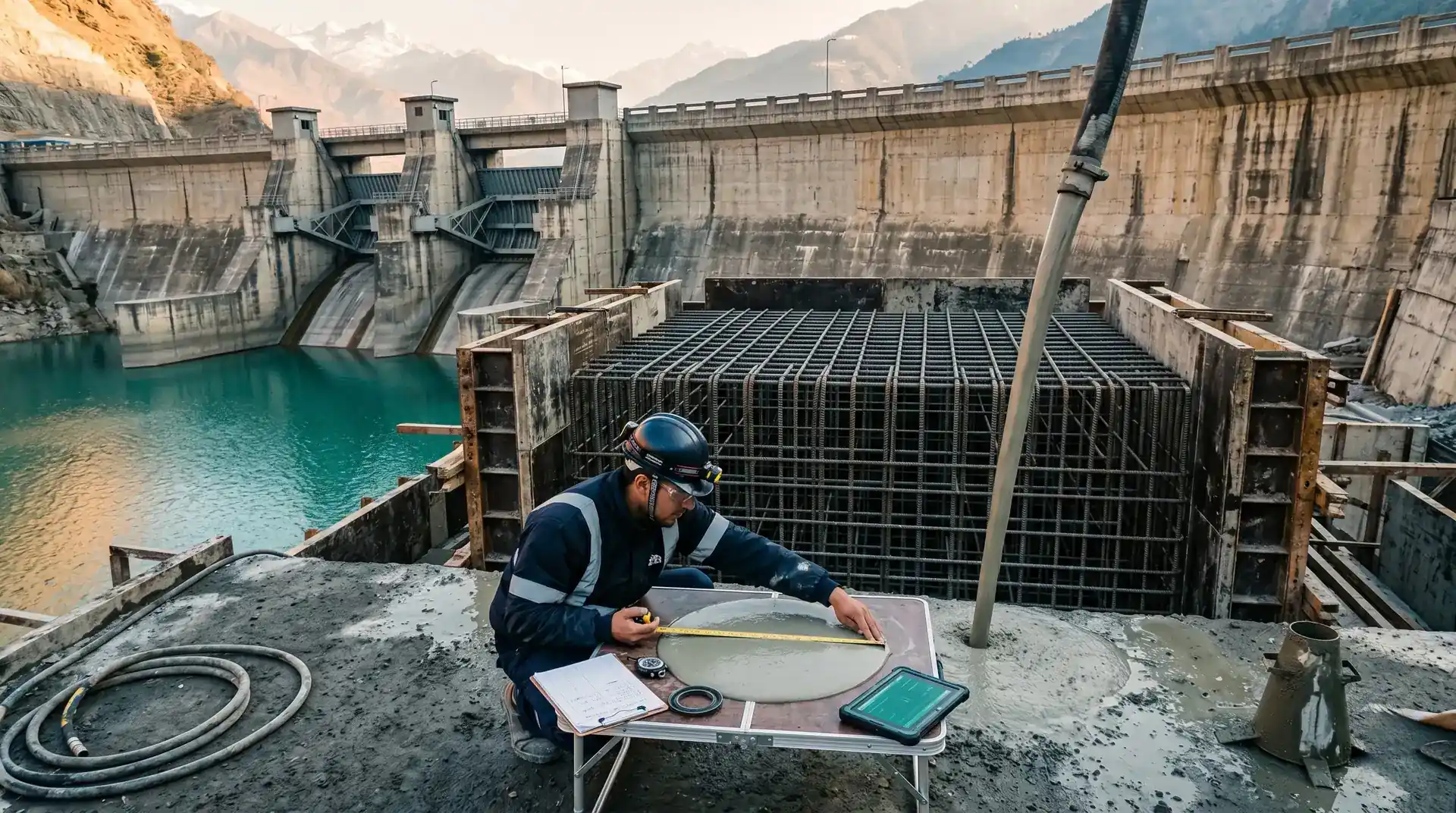
Self-compacting concrete (SCC) is the answer to placement geometries where vibration is impossible. It flows under its own weight, fills the formwork, and consolidates without external compaction. For most dam concrete (mass concrete bodies, RCC lifts, conventional reinforced concrete), SCC is unnecessary and uneconomical. But for specific applications on hydropower projects, particularly second-stage concrete around embedded steel, congested rebar zones, and tunnel crown concrete, SCC is genuinely the right tool. This article describes when to use it and how to specify it correctly.
Read Article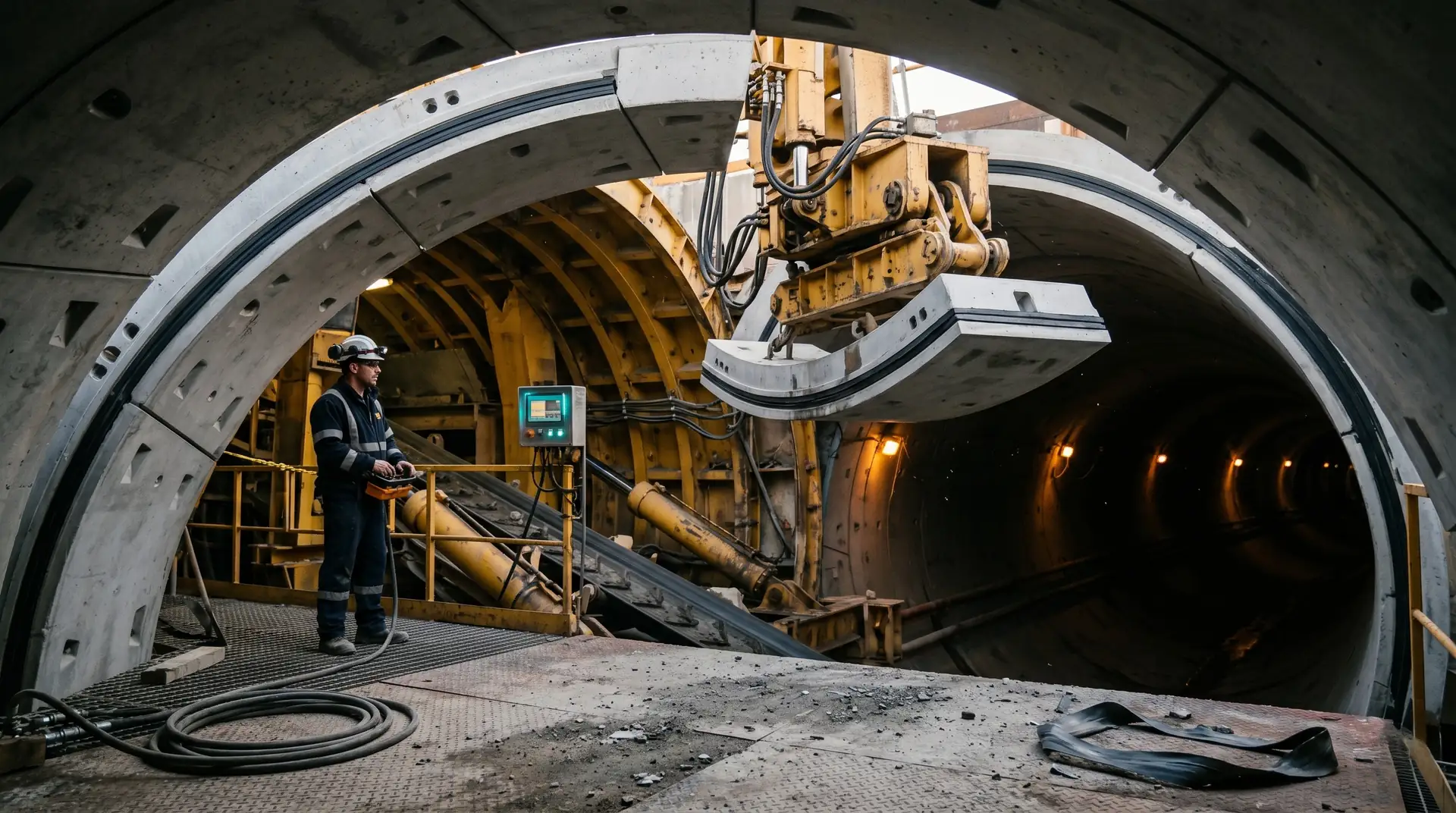
NATM vs TBM Tunneling: Concrete Implications for Hydropower Tunnels
The choice between NATM and TBM tunneling on a hydropower project is usually framed as a construction question. It is also a concrete question. NATM uses shotcrete primary support followed by cast-in-place secondary lining, with all the construction sequencing flexibility and risk transfer that implies. TBM uses precast segmental linings installed inside the shield, with industrial repeatability and a completely different durability profile. The concrete in each system answers to different specifications, behaves differently under load, and ages differently. Engineers planning a tunnel route or reviewing a contractor's method statement should understand how the excavation method drives the concrete design, not the other way around.
Read Article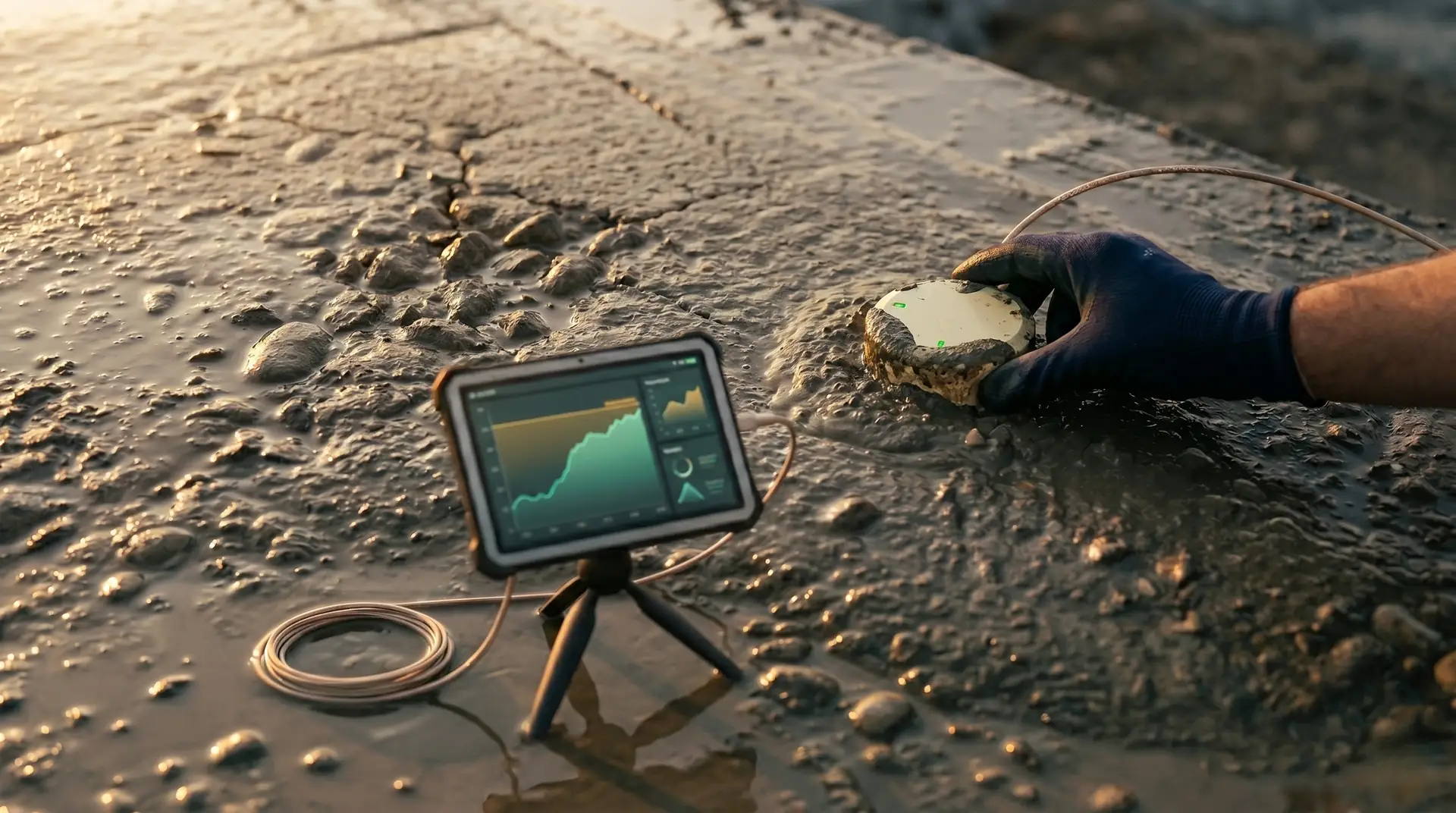
IoT Sensor Networks for Real-Time Concrete Curing Monitoring in Dam Construction
Temperature monitoring in mass concrete dam construction has relied on the same basic technology for decades: vibrating wire or resistance thermocouples, read manually or logged to wired data acquisition systems, compared against ACI 207 or IS 457 limits at shift intervals. The instruments are reliable. The workflow is labour-intensive, spatially limited, and inherently delayed. IoT sensor networks offer a different model. Wireless embedded sensors (Giatec SmartRock, Converge Signal, Maturix Nova) transmit temperature data via Bluetooth to gateways every 15 to 20 minutes, with some models estimating in-place strength using the ASTM C1074 maturity method. Fiber optic distributed temperature sensing (DTS) provides continuous thermal profiles along kilometres of embedded fiber with accuracy of approximately 0.1 degrees C. LoRaWAN gateways extend connectivity across remote dam sites with 10+ km range from a single access point. For dam engineers, the promise is real-time thermal visibility across entire placement blocks, not just at discrete thermocouple locations. The limitations are equally real: battery life constraints, signal attenuation through thick concrete lifts, unproven maturity method accuracy in mass concrete, and zero coverage in Indian standards. This technical brief evaluates what works, what does not, and what a practical deployment looks like on a hydroelectric dam site.
Read Article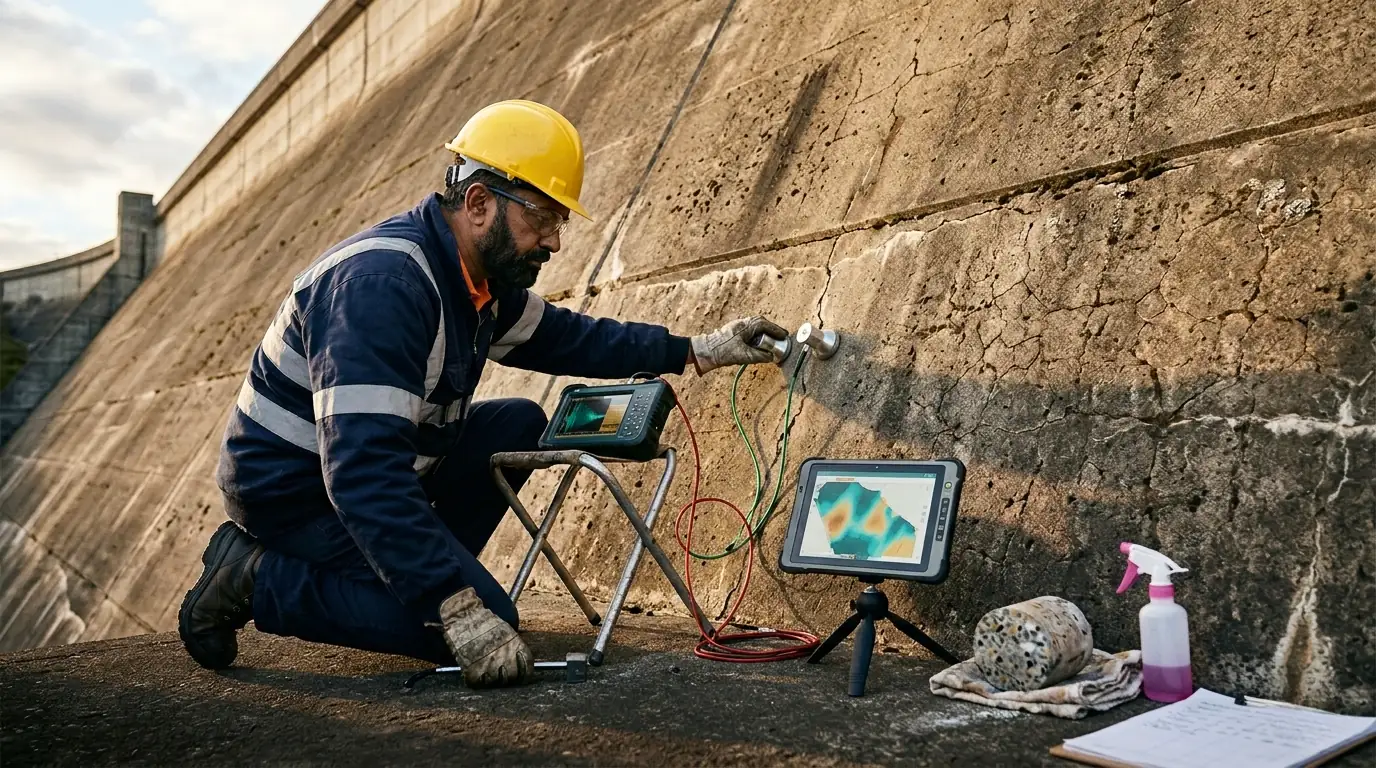
Predictive Analytics for Dam Concrete Deterioration: ML Models, NDT Data, and Remaining Service Life Estimation
More than 80% of India's 5,700+ large dams are older than 25 years. Per the Jal Shakti Ministry's 2024 statement, 1,065 are between 50 and 100 years old, and 224 exceed a century. Globally, ICOLD estimates that over 40% of the world's dams have passed 40 years of service and are in a phase of progressive deterioration. Over 100 large dams worldwide have been identified as seriously affected by alkali-aggregate reaction alone. The traditional approach to assessing remaining service life relies on periodic visual inspection, selective core sampling, and empirical deterioration models calibrated to laboratory data. These methods are slow, spatially limited, and fundamentally backward-looking: they characterise the damage that has already occurred, not the damage that is coming. Machine learning is changing this. XGBoost models predict carbonation depth with R-squared values of 0.977. Ensemble methods predict ASR expansion with correlation coefficients of 0.972. Physics-informed neural networks integrate differential equations with sensor data to predict structural deformation 47% more accurately than traditional finite element methods. This technical brief examines what these models can do for dam concrete specifically, where the data gaps are, and how Indian dam owners can begin integrating predictive analytics into their rehabilitation planning under DRIP Phase II.
Read Article
How to Write Concrete Specifications for a Hydropower Tender: A Practical Guide for Owners and EPCs
The concrete specification in a hydropower EPC tender shapes the rest of the project. It defines acceptance criteria, allocates risk between owner and contractor, sets the QA/QC framework, and pre-determines the disputes that will or will not arise during construction. Most tender specifications are prepared by carrying over text from previous projects, with limited adaptation to the specific conditions of the new site. The result is over-specification in some areas, under-specification in others, and a contractual document that does not reflect the actual engineering needs. This article sets out how a concrete specification should be written for a modern hydropower tender, from the owner's perspective.
Read Article
Climate Change Impact on Dam Concrete Durability: A Forward Look for Indian Hydropower
India's hydropower programme is sized for a climate that no longer fully exists. The temperature extremes that pour design assumed, the monsoon patterns that flood and sediment design assumed, and the glacial regimes that catchment hydrology assumed are all changing. The concrete in the dams already built was specified to a different climate. The concrete in the dams now being designed must anticipate a climate that will have shifted further by mid-century. This article describes the climate trends most relevant to dam concrete and what they imply for design and assessment of Indian hydropower infrastructure.
Read Article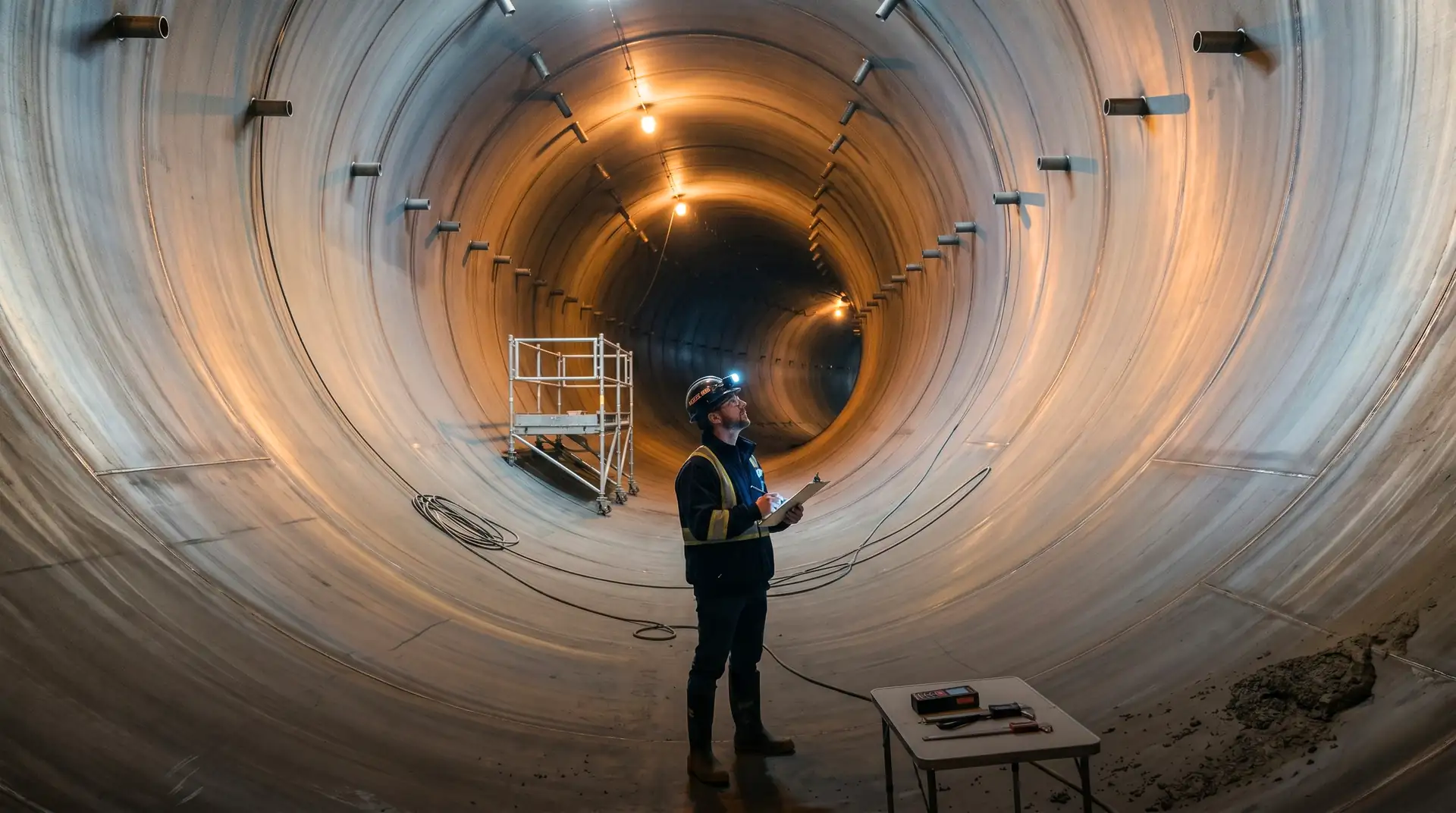
Concrete for Penstock and Pressure Tunnel Linings: Design, Placement, and Crack Control
Penstock and pressure tunnel linings contain water under pressures that can exceed 100 metres of head. A crack in the lining does not merely leak: it can inject water into the surrounding rock mass, destabilise the tunnel, and in extreme cases, cause a pressure tunnel failure that takes the entire power station offline. This article covers the engineering of concrete linings for pressure tunnels and penstocks, from the decision between steel-lined and concrete-lined sections, through mix design and crack control, to the contact and consolidation grouting that seals the lining to the rock.
Read Article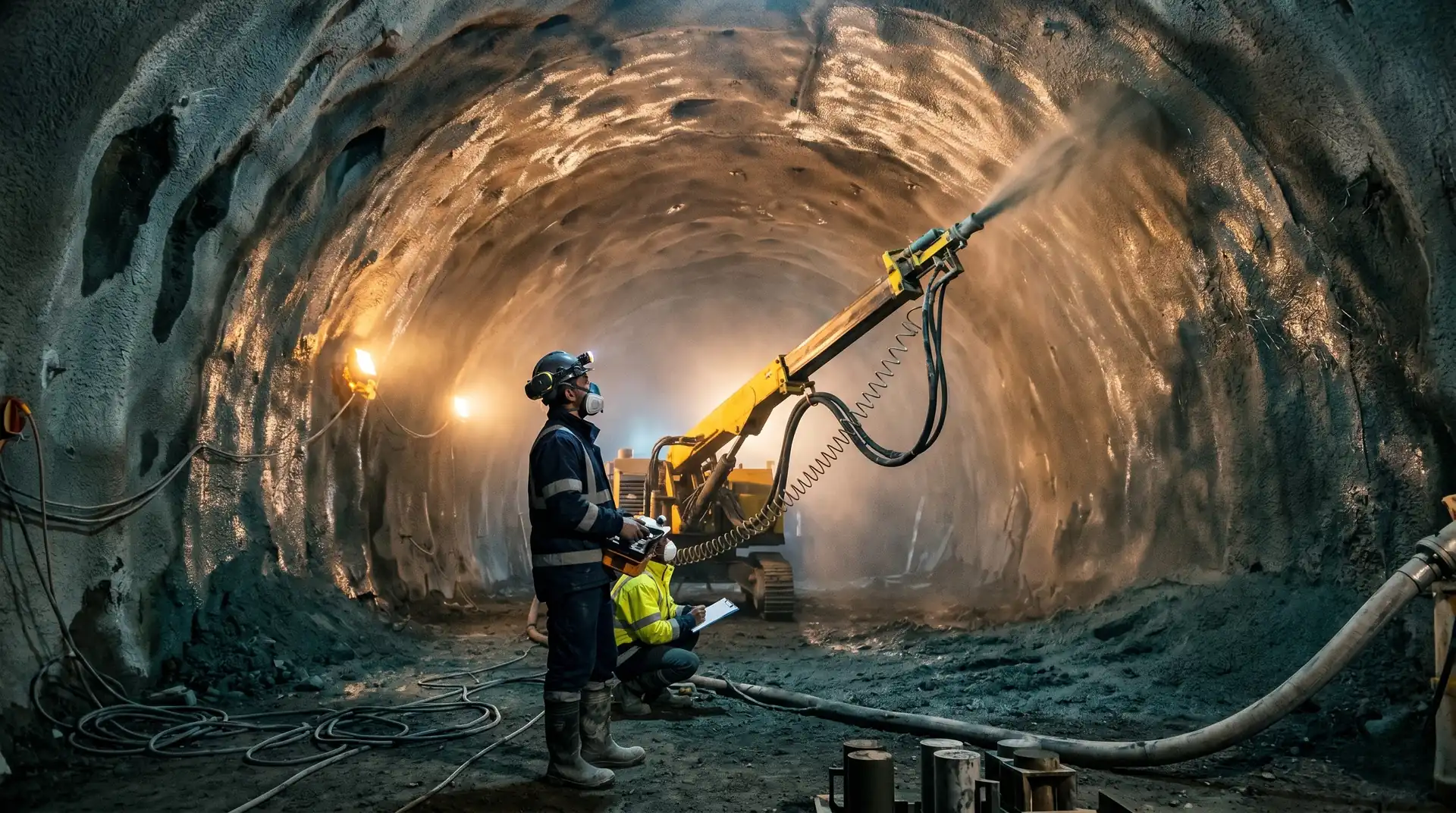
Shotcrete for Hydropower Tunnels: Design, Application, and Quality Control
Hydropower tunnels are the arteries of dam projects: headrace tunnels carry water from the reservoir to the powerhouse, tailrace tunnels discharge it back to the river, and access tunnels provide construction and maintenance access to underground structures. The initial support for these tunnels, and often the permanent lining, is shotcrete: concrete pneumatically projected onto the excavated rock surface at high velocity. Getting the shotcrete right determines whether the tunnel is a durable, watertight conduit or a maintenance liability that deteriorates from the first day of operation.
Read ArticleNewsletter
Concrete Pulse
Stay ahead on concrete technology. Subscribe to our weekly newsletter. Field-tested insights on mass concrete, dam engineering, and QA/QC, delivered straight to your inbox.
Free. No spam. Unsubscribe anytime.
Talk to a concrete specialist within 24 hours.
Whether you're at pre-tender feasibility or mid-construction troubleshooting. Whether your project is in India, Bhutan, Nepal, or beyond.