
About PCCI
Where concrete science meets infrastructure certainty.
PCCI is a specialist concrete technology consultancy built for the world's most demanding infrastructure. We bring deep technical leadership, proven methodologies, and a no-compromise commitment to quality to every engagement.
Our Story
Built on decades of field-proven expertise. Designed for the future.
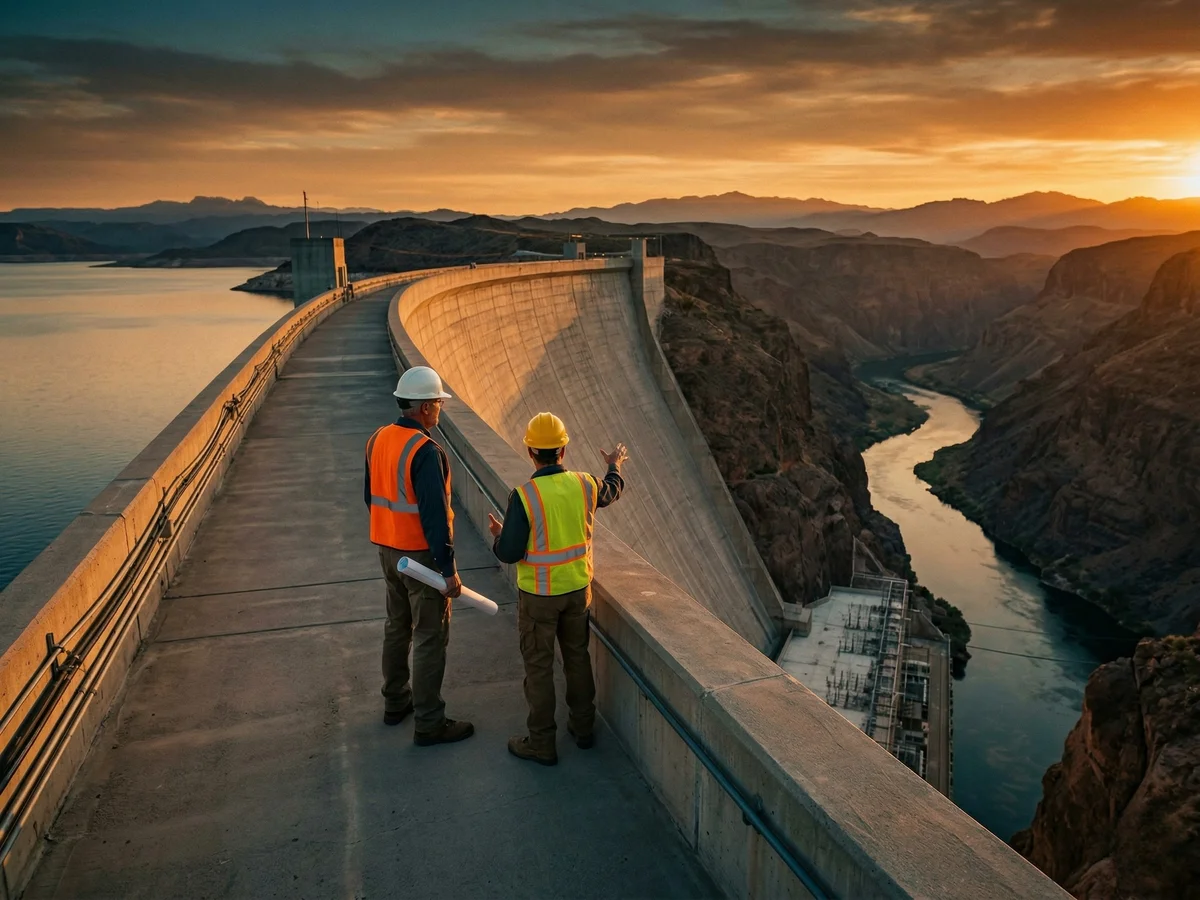
PCCI (Precision Concrete Craft and Innovations Pvt. Ltd.) was established in 2024, but the expertise behind it was forged over decades on the most demanding dam sites in South Asia. Our technical leadership's experience spans landmark hydroelectric programs across India, Bhutan, Nepal, and Laos, from the research laboratory to the placement site.
That expertise was shaped by real challenges on real projects: different aggregates, different climates, different structural demands. Each one refined the methodology that PCCI now brings to every engagement: test rigorously, design precisely, and never accept a pour that doesn't meet the standard.
In 2024, Mr. A.K. Sthapak and Mr. Kushal Sthapak co-founded PCCI to formalize this deep knowledge into a dedicated consulting firm. The mission: make world-class concrete technology accessible to every hydroelectric and large-scale infrastructure project that needs it, from compact run-of-river installations to the world's largest gravity dams.
Today, PCCI is building a team of specialist professionals who share that same commitment to technical excellence. Backed by a network of accredited partner laboratories across India, PCCI can design and manage comprehensive testing programs for projects in any location: from trial mix development through 180-day strength evaluation, while maintaining full engineering oversight and quality control.
Serving hydroelectric and large-scale infrastructure projects across South Asia, with growing engagement in Southeast Asian markets, our vision is clear: become the consulting firm that the industry's most critical projects turn to when concrete performance is non-negotiable.
PCCI is the firm we wish existed when these projects started. Now it does.
1980s to 1990s
Roots in Research and Field
The technical expertise that underpins PCCI takes shape across dam construction sites and at the Central Soil and Materials Research Station (CSMRS), New Delhi. Deep knowledge is built at the intersection of concrete technology, rock mechanics, and field engineering.
1990s to 2000s
Pioneering Indian Firsts
Key involvement in India's first RCC dam at Ghatghar, Maharashtra. First mass-scale epoxy concrete application at Singur Dam. Pioneering use of GPR for masonry dam evaluation. Authorship of Indian Standard IS:14591 on thermal control of mass concrete.
2002 to 2012
Landmark Hydropower Programs
Concrete QC and optimization for Tala (1,020 MW) in Bhutan and Karchham Wangtoo (1,000 MW) in India. Cost-effective, high-performance mix designs developed spanning concrete, shotcrete, and grout. The methodologies proven here form the backbone of PCCI's approach today.
2012 to 2023
Multi-Country Track Record
End-to-end QC leadership at Mangdechhu (720 MW) and Punatsangchhu-1 (1,200 MW) in Bhutan. Engagements in Nepal (Tanahu, 140 MW) and Laos (Nam Long 2). Advanced work in durability, AAR mitigation, and eco-friendly high fly ash formulations.
2024
PCCI is Born
PCCI is co-founded by Mr. A.K. Sthapak and Mr. Kushal Sthapak, bringing together decades of proven expertise with a vision to build the specialist concrete technology consultancy the industry needs. Active consulting continues on the Tanahu Hydropower Project in Nepal.
Leadership
Led by experts who've shaped the industry.
PCCI's technical credibility begins with its leadership. Our technical lead has authored national standards, pioneered new concrete technologies, and delivered quality programs on some of the most critical hydroelectric projects in South Asia.
Photo coming soon
Mr. Arvind Kumar Sthapak
Managing Director
Mr. A.K. Sthapak holds an M.Tech in Rock Mechanics from IIT Delhi and a B.E. in Civil Engineering. He is one of South Asia's most experienced concrete technologists, with a career spanning government research, national standards development, and hands-on project leadership across four countries.
During two decades at the Central Soil and Materials Research Station (CSMRS), he played key roles in several Indian firsts: the country's first RCC dam at Ghatghar, the first mass-scale epoxy concrete application at Singur Dam, and the pioneering use of Ground Penetrating Radar for masonry dam evaluation. He authored IS:14591, India's national standard on thermal control of mass concrete, and contributed to the revision of IS 456:2000.
His project leadership spans landmark hydroelectric programs including Tala (1,020 MW) in Bhutan, Karchham Wangtoo (1,000 MW) in India, Mangdechhu (720 MW) and Punatsangchhu-1 (1,200 MW) in Bhutan, and engagements in Nepal and Laos. His specializations include mass concrete mix design, thermal control engineering, cement optimization, durability assessment, AAR mitigation, and QA/QC system design.
M.Tech, IIT Delhi
Rock Mechanics
Author, IS:14591
Thermal Control of Mass Concrete
48+ Publications
International technical papers
4 Countries
India, Bhutan, Nepal, Laos
Professional Affiliations
Rooted in the professional community.
ICI
Indian Concrete Institute
ACCE(I)
Association of Consulting Civil Engineers (India)
ISRMTT
Indian Society for Rock Mechanics & Tunnelling Technology
ISCMS
Indian Society for Construction Materials & Structures
Compliance expertise across international and Indian standards
Our Values
Principles that aren't negotiable.
No-Compromise Quality
Every mix design, every QC protocol, every advisory meets the same standard: the highest one. We don't cut corners because the concrete won't forgive us if we do.
Deep Field Expertise
Our experts bring decades of field experience to every engagement. Whether through on-site supervision or precise technical direction, we ensure every critical pour meets the standard.
Tailored Solutions
Every project gets a customized approach, never off-the-shelf answers. Different aggregates, different climates, different structural demands require different solutions.
Sustainability Through Science
We optimize cement content to reduce both cost and carbon simultaneously. The greenest concrete is the one you don't have to repair. We engineer for 100-year durability.
Knowledge Transfer
We don't hoard expertise. We build capacity. Through training programs, QC manuals, and technology transfer, we leave client teams stronger than we found them.
Full Lifecycle Partnership
From pre-tender material investigation through post-construction rehabilitation, we are with you for the entire journey. Your concrete is our responsibility, start to finish.
How We Work
Embedded expertise, not arm's-length advice.
PCCI integrates directly with your project team. We tailor our engagement to your specific needs, from focused advisory on a single challenge to full-lifecycle consulting.
Assessment & Planning
- Material investigation
- Feasibility studies
- Mix design strategy
- QC framework planning
Construction Support
- Mix design development
- On-site QA/QC
- Material testing
- Thermal control
Post-Construction
- NDT assessment
- Repair guidance
- Performance monitoring
- Life extension
Knowledge Transfer
- Team training
- QC manual preparation
- Technology transfer
- Capacity building
Frequently Asked Questions
About PCCI
Who founded PCCI and what is their background?
When was PCCI established?
What makes PCCI different from other concrete consultants?
What are Mr. A.K. Sthapak's qualifications and achievements?
Which professional bodies is PCCI affiliated with?
From the field
Concrete intelligence, not opinions. Lessons from inside dam sites.
Technical insights grounded in real project experience. Written by engineers, for engineers.
Self-Compacting Concrete (SCC) for Dam Construction: Applications and Specifications
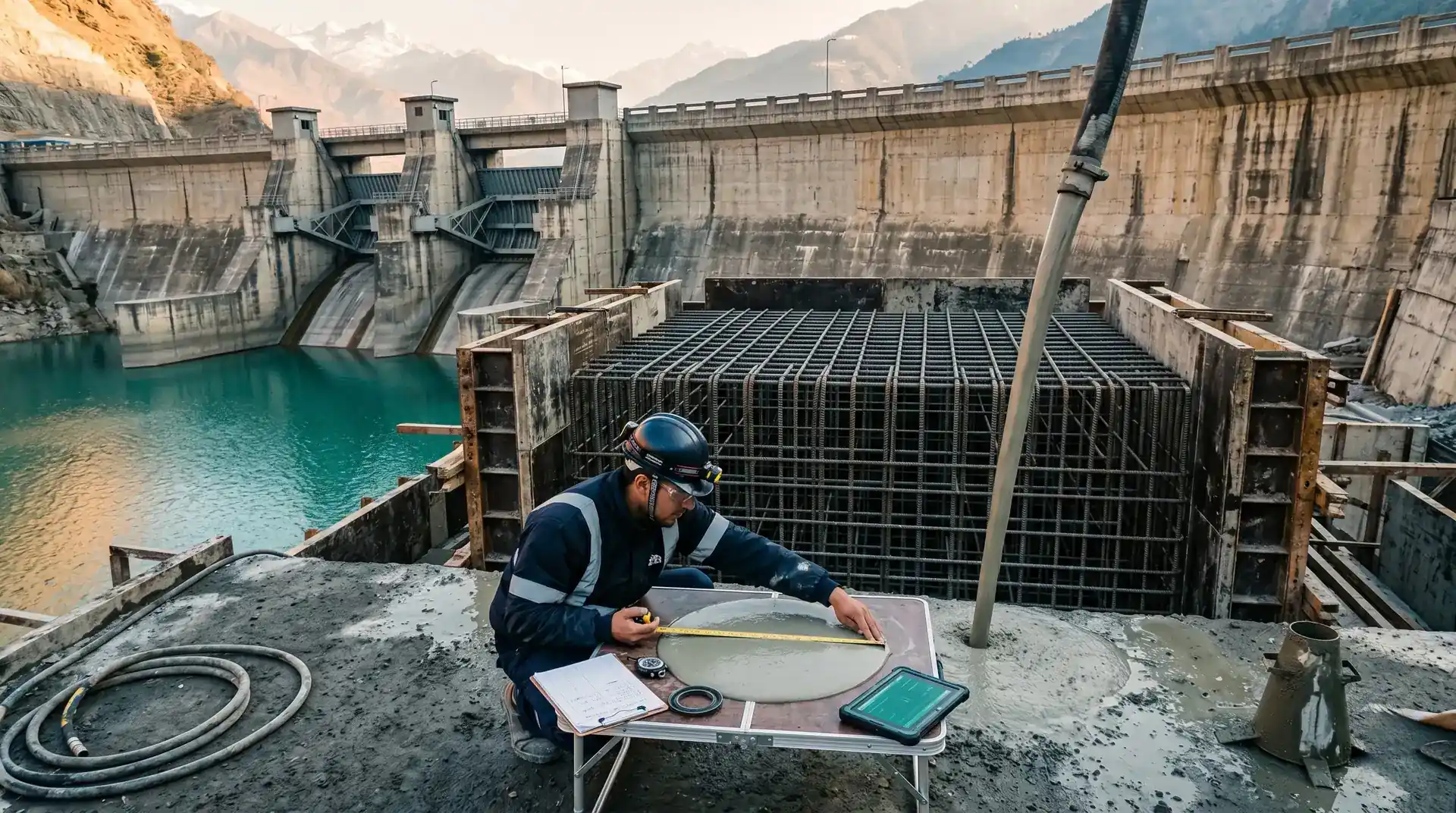
Self-compacting concrete (SCC) is the answer to placement geometries where vibration is impossible. It flows under its own weight, fills the formwork, and consolidates without external compaction. For most dam concrete (mass concrete bodies, RCC lifts, conventional reinforced concrete), SCC is unnecessary and uneconomical. But for specific applications on hydropower projects, particularly second-stage concrete around embedded steel, congested rebar zones, and tunnel crown concrete, SCC is genuinely the right tool. This article describes when to use it and how to specify it correctly.
Read Article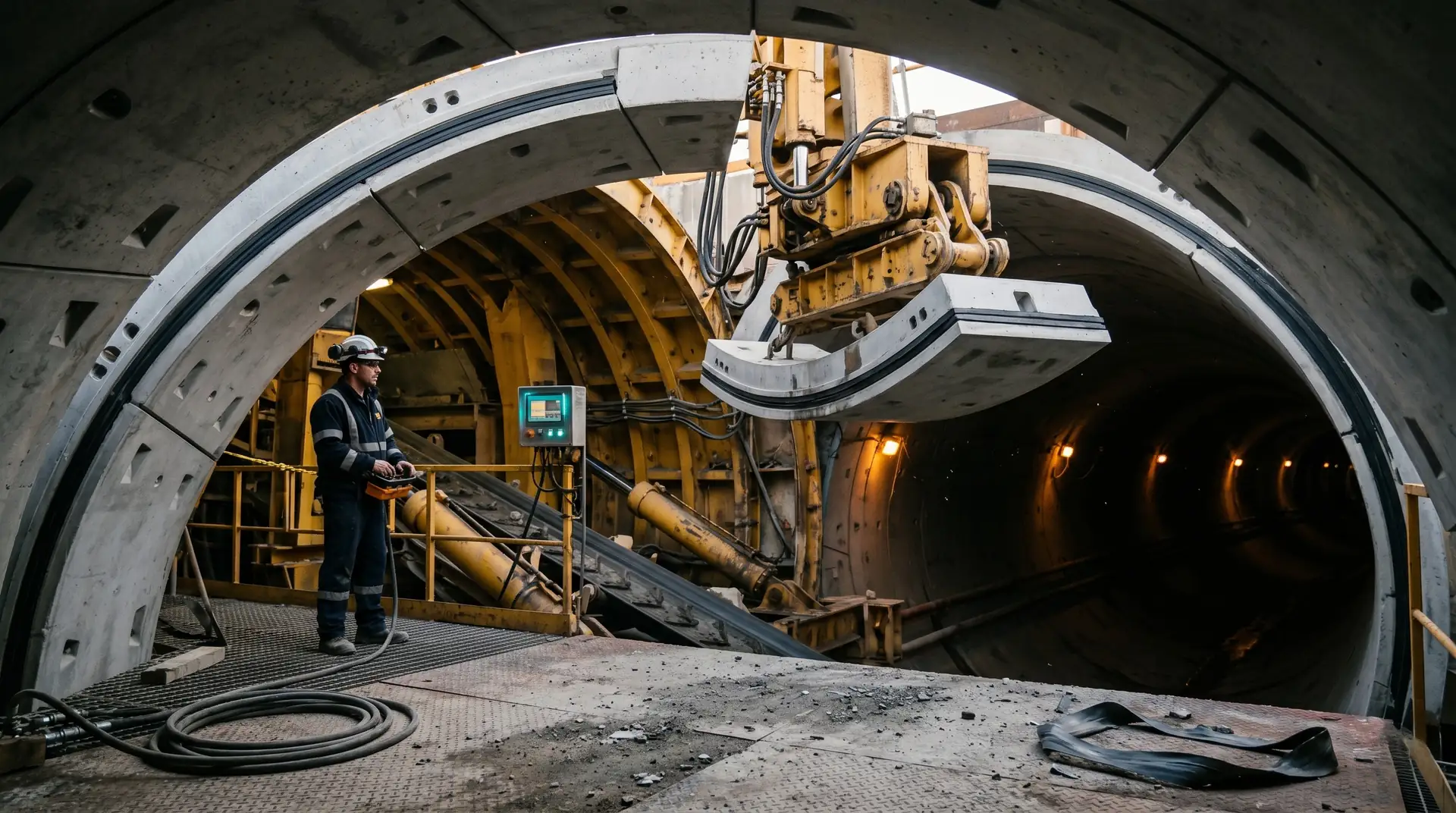
NATM vs TBM Tunneling: Concrete Implications for Hydropower Tunnels
The choice between NATM and TBM tunneling on a hydropower project is usually framed as a construction question. It is also a concrete question. NATM uses shotcrete primary support followed by cast-in-place secondary lining, with all the construction sequencing flexibility and risk transfer that implies. TBM uses precast segmental linings installed inside the shield, with industrial repeatability and a completely different durability profile. The concrete in each system answers to different specifications, behaves differently under load, and ages differently. Engineers planning a tunnel route or reviewing a contractor's method statement should understand how the excavation method drives the concrete design, not the other way around.
Read Article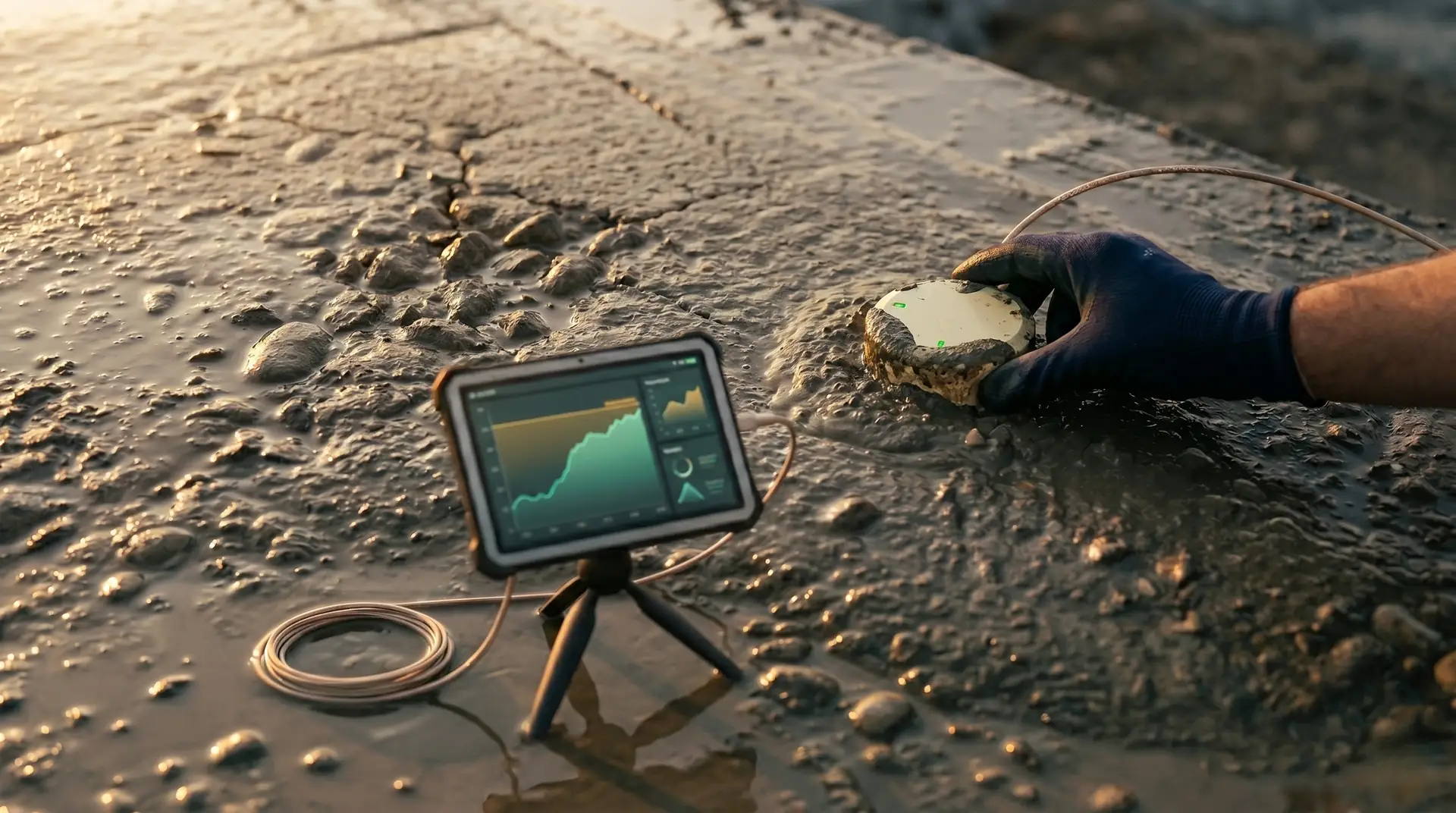
IoT Sensor Networks for Real-Time Concrete Curing Monitoring in Dam Construction
Temperature monitoring in mass concrete dam construction has relied on the same basic technology for decades: vibrating wire or resistance thermocouples, read manually or logged to wired data acquisition systems, compared against ACI 207 or IS 457 limits at shift intervals. The instruments are reliable. The workflow is labour-intensive, spatially limited, and inherently delayed. IoT sensor networks offer a different model. Wireless embedded sensors (Giatec SmartRock, Converge Signal, Maturix Nova) transmit temperature data via Bluetooth to gateways every 15 to 20 minutes, with some models estimating in-place strength using the ASTM C1074 maturity method. Fiber optic distributed temperature sensing (DTS) provides continuous thermal profiles along kilometres of embedded fiber with accuracy of approximately 0.1 degrees C. LoRaWAN gateways extend connectivity across remote dam sites with 10+ km range from a single access point. For dam engineers, the promise is real-time thermal visibility across entire placement blocks, not just at discrete thermocouple locations. The limitations are equally real: battery life constraints, signal attenuation through thick concrete lifts, unproven maturity method accuracy in mass concrete, and zero coverage in Indian standards. This technical brief evaluates what works, what does not, and what a practical deployment looks like on a hydroelectric dam site.
Read Article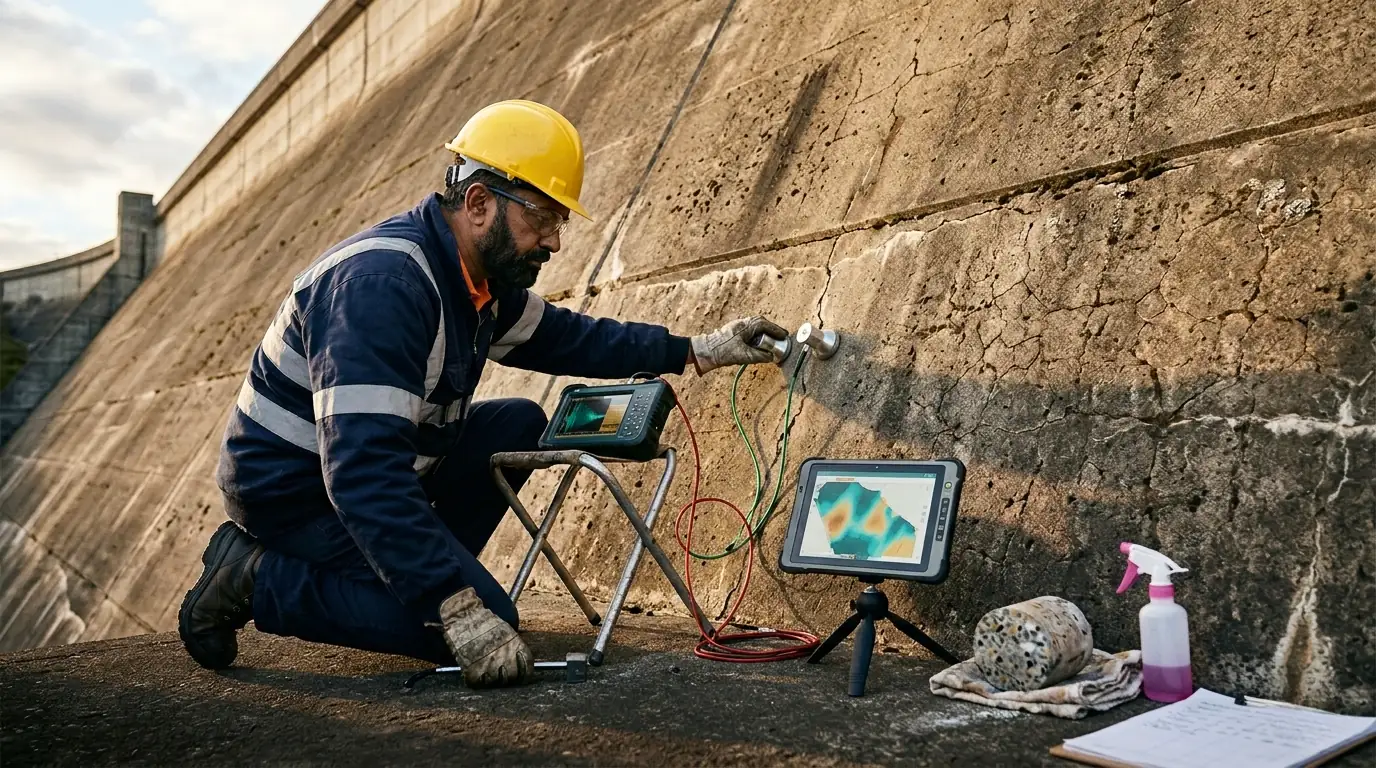
Predictive Analytics for Dam Concrete Deterioration: ML Models, NDT Data, and Remaining Service Life Estimation
More than 80% of India's 5,700+ large dams are older than 25 years. Per the Jal Shakti Ministry's 2024 statement, 1,065 are between 50 and 100 years old, and 224 exceed a century. Globally, ICOLD estimates that over 40% of the world's dams have passed 40 years of service and are in a phase of progressive deterioration. Over 100 large dams worldwide have been identified as seriously affected by alkali-aggregate reaction alone. The traditional approach to assessing remaining service life relies on periodic visual inspection, selective core sampling, and empirical deterioration models calibrated to laboratory data. These methods are slow, spatially limited, and fundamentally backward-looking: they characterise the damage that has already occurred, not the damage that is coming. Machine learning is changing this. XGBoost models predict carbonation depth with R-squared values of 0.977. Ensemble methods predict ASR expansion with correlation coefficients of 0.972. Physics-informed neural networks integrate differential equations with sensor data to predict structural deformation 47% more accurately than traditional finite element methods. This technical brief examines what these models can do for dam concrete specifically, where the data gaps are, and how Indian dam owners can begin integrating predictive analytics into their rehabilitation planning under DRIP Phase II.
Read Article
How to Write Concrete Specifications for a Hydropower Tender: A Practical Guide for Owners and EPCs
The concrete specification in a hydropower EPC tender shapes the rest of the project. It defines acceptance criteria, allocates risk between owner and contractor, sets the QA/QC framework, and pre-determines the disputes that will or will not arise during construction. Most tender specifications are prepared by carrying over text from previous projects, with limited adaptation to the specific conditions of the new site. The result is over-specification in some areas, under-specification in others, and a contractual document that does not reflect the actual engineering needs. This article sets out how a concrete specification should be written for a modern hydropower tender, from the owner's perspective.
Read Article
Climate Change Impact on Dam Concrete Durability: A Forward Look for Indian Hydropower
India's hydropower programme is sized for a climate that no longer fully exists. The temperature extremes that pour design assumed, the monsoon patterns that flood and sediment design assumed, and the glacial regimes that catchment hydrology assumed are all changing. The concrete in the dams already built was specified to a different climate. The concrete in the dams now being designed must anticipate a climate that will have shifted further by mid-century. This article describes the climate trends most relevant to dam concrete and what they imply for design and assessment of Indian hydropower infrastructure.
Read Article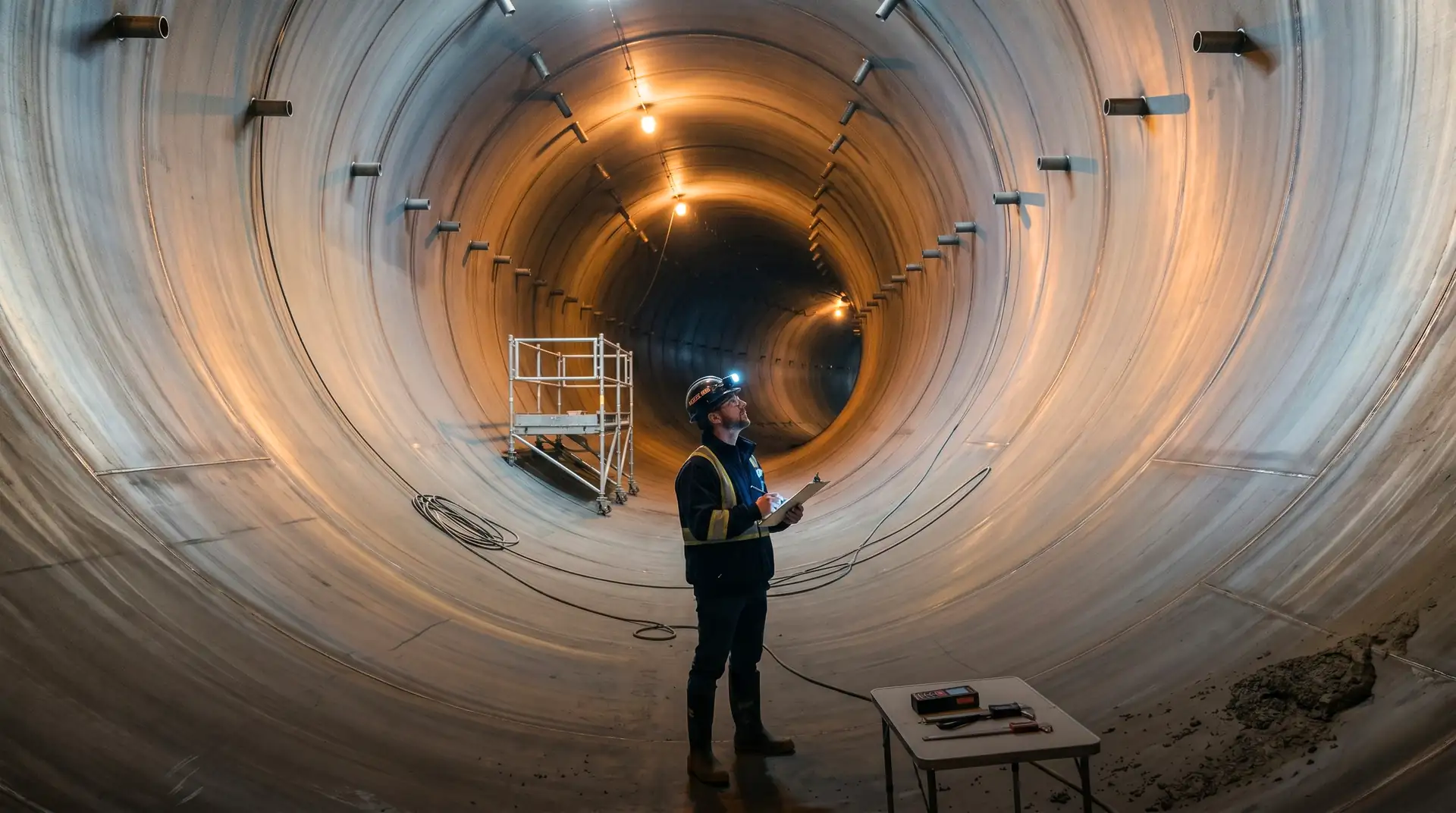
Concrete for Penstock and Pressure Tunnel Linings: Design, Placement, and Crack Control
Penstock and pressure tunnel linings contain water under pressures that can exceed 100 metres of head. A crack in the lining does not merely leak: it can inject water into the surrounding rock mass, destabilise the tunnel, and in extreme cases, cause a pressure tunnel failure that takes the entire power station offline. This article covers the engineering of concrete linings for pressure tunnels and penstocks, from the decision between steel-lined and concrete-lined sections, through mix design and crack control, to the contact and consolidation grouting that seals the lining to the rock.
Read Article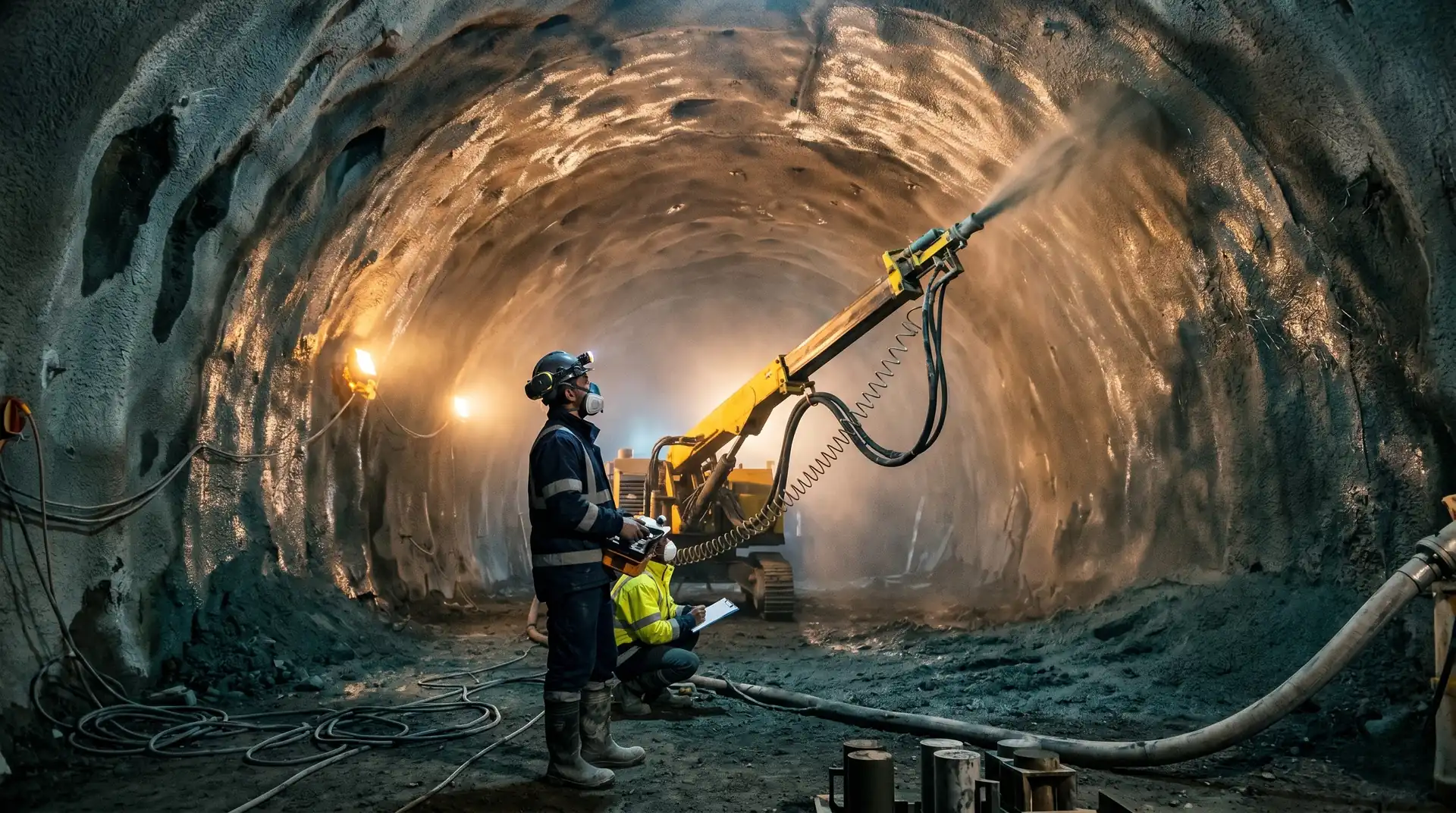
Shotcrete for Hydropower Tunnels: Design, Application, and Quality Control
Hydropower tunnels are the arteries of dam projects: headrace tunnels carry water from the reservoir to the powerhouse, tailrace tunnels discharge it back to the river, and access tunnels provide construction and maintenance access to underground structures. The initial support for these tunnels, and often the permanent lining, is shotcrete: concrete pneumatically projected onto the excavated rock surface at high velocity. Getting the shotcrete right determines whether the tunnel is a durable, watertight conduit or a maintenance liability that deteriorates from the first day of operation.
Read ArticleNewsletter
Concrete Pulse
Stay ahead on concrete technology. Subscribe to our weekly newsletter. Field-tested insights on mass concrete, dam engineering, and QA/QC, delivered straight to your inbox.
Free. No spam. Unsubscribe anytime.
Talk to a concrete specialist within 24 hours.
Whether you're at pre-tender feasibility or mid-construction troubleshooting. Whether your project is in India, Bhutan, Nepal, or beyond.